 +1 (619) 334-1440
 9484 Mission Park Place Santee, CA 92071 USA
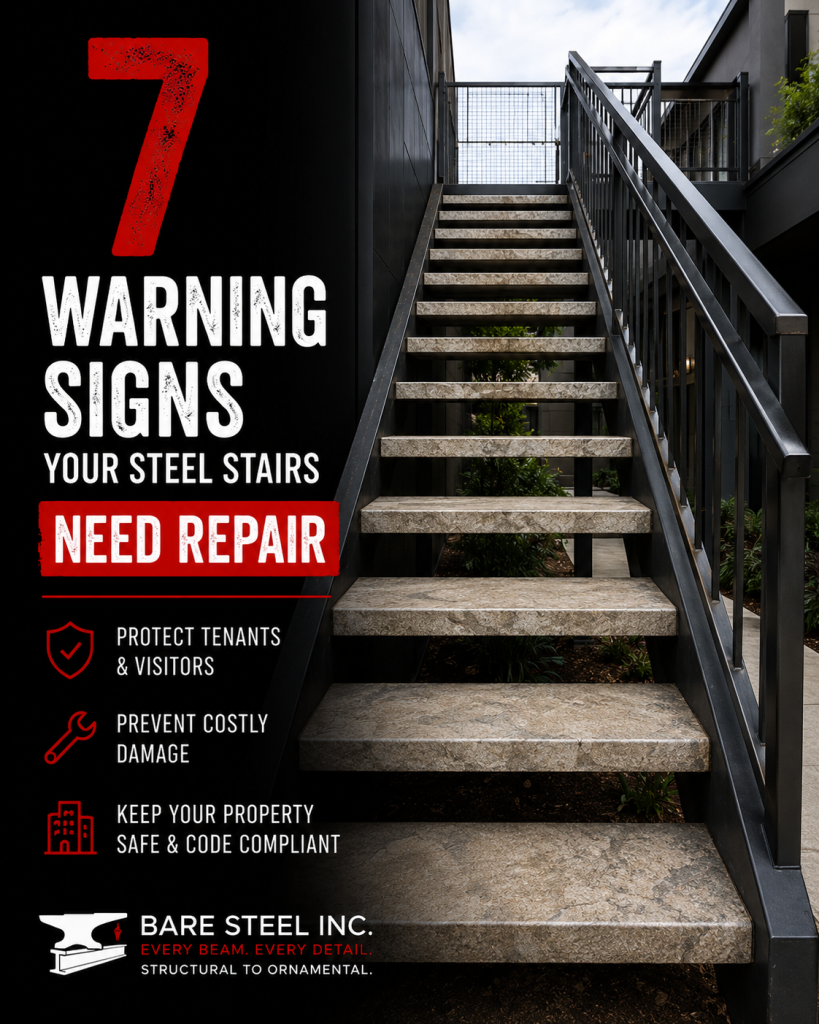
When Does a Steel Stair Need Repair or Replacement? 7 Warning Signs Property Owners Shouldn’t Ignore
Steel stairs are one of the most durable components of a building, but even the strongest steel systems require routine inspections and maintenance. Over time, exposure to weather, heavy foot traffic, corrosion, and structural movement can create safety concerns that should never be ignored.
For apartment complexes, commercial properties, industrial facilities, and multi-family communities, damaged stairs can become a liability issue, lead to costly repairs, and create safety risks for tenants and visitors.
Here are seven warning signs that your steel stairs may need professional repair or replacement.
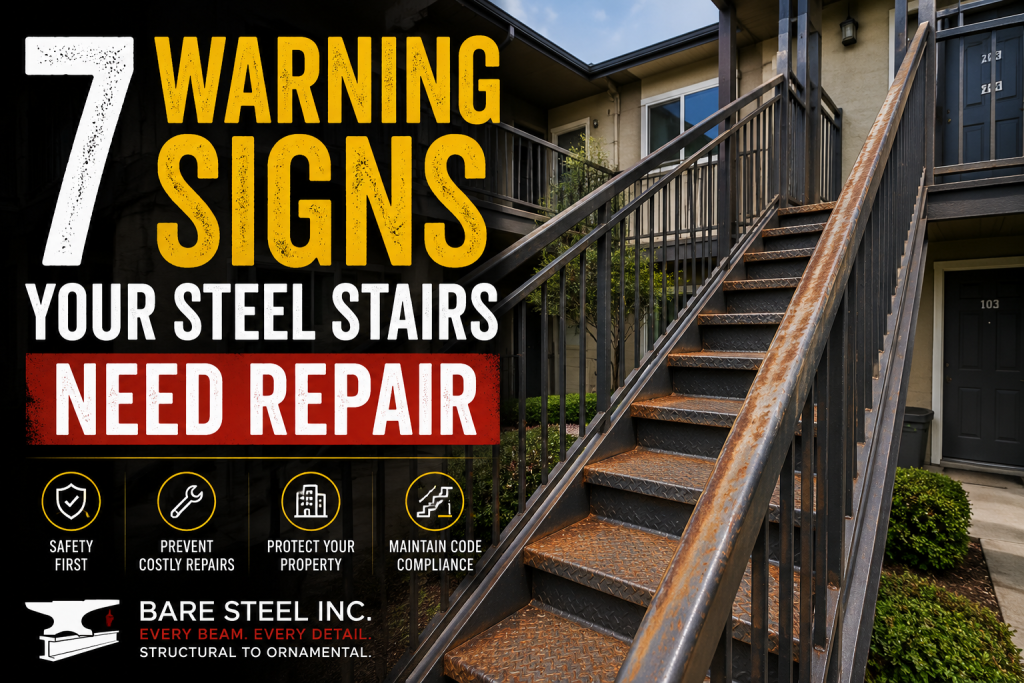
1. Visible Rust and Corrosion
Surface rust may seem minor, but corrosion can spread quickly when left untreated. Rust weakens steel over time and can compromise the integrity of stair stringers, treads, handrails, and connections.
Common areas to inspect include:
- Stair landings
- Base plates
- Welded connections
- Handrail posts
- Areas where water collects
Early rust treatment is significantly less expensive than major steel replacement.
2. Loose or Wobbling Handrails
Handrails provide critical safety support for pedestrians. If a handrail moves when pressure is applied, there may be loose anchors, deteriorated welds, or structural movement occurring beneath the surface.
A loose handrail should be inspected immediately to prevent accidents and maintain code compliance.
3. Damaged or Worn Stair Treads
Steel stair treads endure constant foot traffic. Over time they can become worn, bent, cracked, or damaged by impacts and weather exposure.
Signs of concern include:
- Uneven walking surfaces
- Excessive wear
- Cracked welds
- Loose treads
- Slippery surfaces caused by deterioration
Replacing damaged treads often restores safety without requiring a complete stair replacement.
4. Cracked Welds
Welds are often the strongest part of a fabricated steel assembly, but years of movement, vibration, and loading can eventually cause fatigue.
Inspect for:
- Visible cracks
- Separation between members
- Rust forming around welds
- Gaps in welded connections
Cracked welds should be repaired by qualified steel professionals before the damage spreads.
5. Structural Movement or Deflection
If stairs appear to bounce, flex, sag, or move excessively during use, the structure may have underlying issues requiring immediate attention.
Structural movement can indicate:
- Overloading
- Connection failures
- Corrosion damage
- Settlement issues
- Structural member deterioration
Professional evaluation can determine whether repairs or replacement are the safest option.
6. Water Damage Around Connections
Water intrusion is one of the leading causes of steel deterioration. Areas where steel meets concrete, walls, or roofing systems are especially vulnerable.
Property owners should regularly inspect:
- Base plates
- Anchor locations
- Landing supports
- Drainage areas
Addressing water issues early helps extend the life of steel stair systems.
7. Outdated Safety Features
Building codes continue to evolve. Older stair systems may lack features now considered standard for safety and accessibility.
Upgrades may include:
- New handrails
- Guardrails
- ADA-compliant features
- Improved tread surfaces
- Enhanced corrosion protection
Modernizing stair systems can improve safety while reducing future maintenance costs.
Preventative Maintenance Saves Money
Many stair replacements begin as minor repair issues that were ignored for too long. Routine inspections, maintenance, touch-up painting, and repair work can significantly extend the life of steel stair systems.
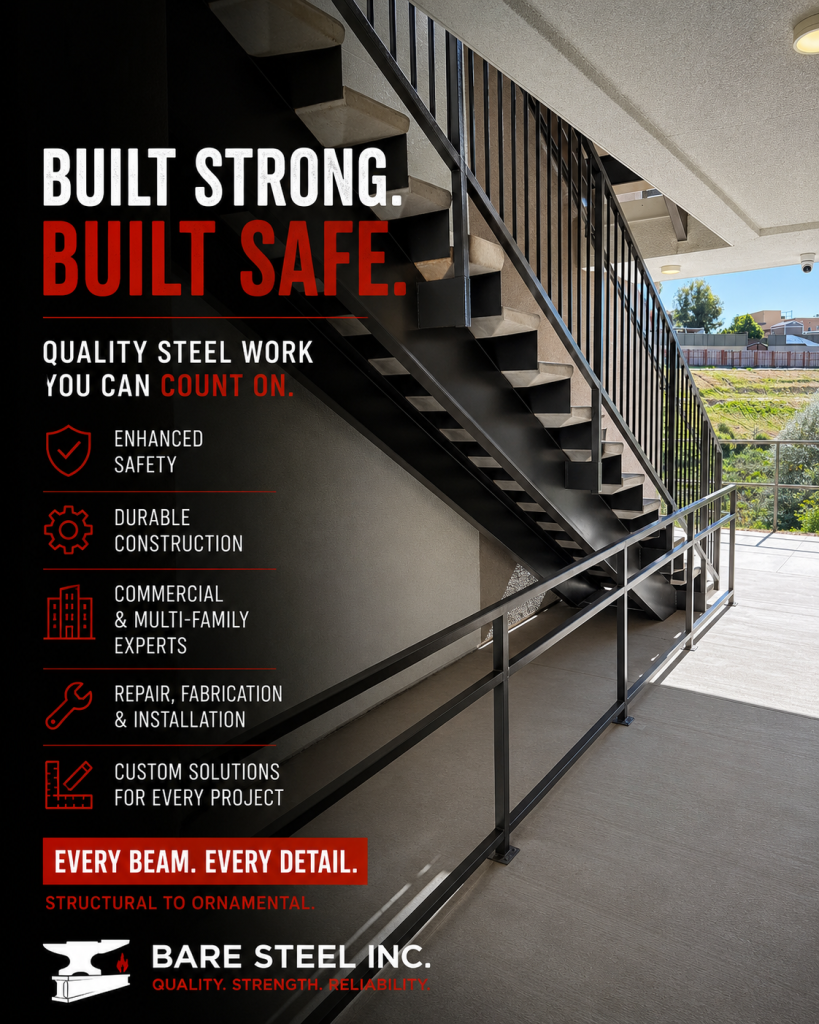
At BARE STEEL INC., we provide steel stair inspections, repairs, fabrication, maintenance, and replacement services for commercial, multi-family, HOA, and residential properties throughout Southern California.
Whether you need a minor repair or a complete stair replacement, our team can help evaluate your system and recommend the best solution.
Need your steel stairs inspected? Contact BARE STEEL INC. today for a professional evaluation and repair estimate.
Every Beam. Every Detail. Structural to Ornamental.